
How to Get Water Out of Your Ear: 10 Safe Methods That Work
That squelching sound, the half-blocked hearing, the sudden worry when a shower tilt or pool dive leaves you shaking your head—water trapped in your ear is a miserable distraction. You hop on one foot. You push a towel corner too deep. Nothing budges. Ignoring it invites bacteria and a world of pain. This guide walks you through exactly how to get water out of your ear fast, using safe, anatomy-friendly techniques that work.
Why Water Gets Stuck in Your Ear
Your ear canal is a warm, curved tunnel lined with fine hairs and wax-producing glands. That wax, or cerumen, serves a purpose. It traps dust and repels insects, but it also creates a natural dam. When water enters, surface tension turns a simple droplet into a clingy plug. A narrow or bendy canal—something many people are born with—makes drainage harder. Even a tiny bit of earwax swelling on contact with water seals the exit.
Add a curved path and a gravity-defying angle, and fluid just sits there. Children deal with this more often because their Eustachian tubes sit flatter and shorter. Adults with hairy canals or who wear hearing aids or earbuds trap moisture, too. The real problem isn’t the water itself. It’s what grows in it.
The Danger of Ignoring Trapped Water
Moisture transforms your ear into a bacterial incubator. The medical term for the resulting infection is otitis externa, known widely as swimmer’s ear. Its signature is a tender, swollen canal that throbs with chewing. The CDC reports that swimmer’s ear results in 2.4 million healthcare visits every year in the United States alone. Warm, damp ears also invite fungal overgrowth, otomycosis, which itches relentlessly and requires antifungal drops.
A clogged ear muffles sound and disorients your sense of balance. Persistent fluid can macerate the thin skin inside, leading to painful cracks. Left long enough, a forgotten drop can turn into a thick discharge, temporary hearing loss, and shooting pain down the jaw. Speed matters. Learning how to get water out of your ear the right way prevents a minor annoyance from becoming a medical appointment.
How to Get Water Out of Your Ear Using Gravity
Gravity is your first, safest tool. Skip the violent head-shaking that can bruise the canal.
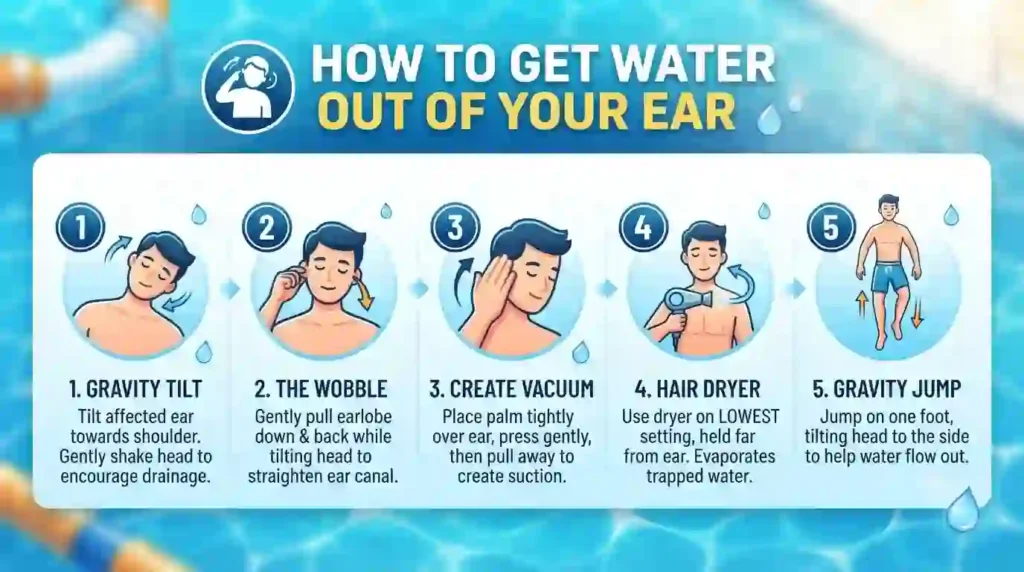
Lie on your side with the blocked ear facing down. Press your ear flat into a clean pillow or a folded towel. Stay still for three to five minutes. The gentle pull of gravity often coaxes the droplet down the canal’s curve. If nothing happens, try the palmar suction technique: cup your palm tightly over the whole ear, press and release rapidly 10 times. This creates a tiny plunger effect.
For stubborn water, combine gravity with the tilt-and-tug method. Grasp the fleshy earlobe between your thumb and finger. Pull it downward and backward while tilting your head at a 45-degree angle. The motion straightens the canal’s natural bend, creating an open runway. Wiggle your jaw at the same time. Many people feel a sudden warm release as the fluid escapes.
The Valsalva Maneuver That Pops Fluid Free
This technique borrows from scuba divers and flight passengers. It equalizes pressure across the eardrum and can push a water pocket out from behind wax or debris.
Inhale gently. Use your fingers to pinch your nostrils shut. Keep your mouth closed. Blow air out softly through your nose, as if fogging up a cold window. Never blow hard—a sudden pressure spike can rupture an eardrum. Hold the gentle pressure for two seconds, then release. You may hear a faint crackling or pop. That signals the Eustachian tube opening. Tilt the blocked ear down immediately. Warm water often drains right out.
Medical experts at the Mayo Clinic caution that anyone with a cold, sinus infection, or known eardrum perforation should skip this method entirely. Congestion pushes infected mucus into the middle ear. Only use the Valsalva when your nasal passages feel clear.
How to Get Water Out of Your Ear Using a Vacuum
Creating a soft vacuum draws fluid outward without any risk of pushing it deeper. This method uses only your hand.
Tilt your head so the wet ear points straight toward the floor. Place the entire palm of your opposite hand tightly over the ear, creating an airtight seal. Press your cupped palm inward gently, then quickly pull it away. The release creates a negative pressure that can suck the water out. Repeat the press-and-release rhythm five to six times. You will often hear a squishy sound as the water breaks surface tension and exits. Pat the outer ear dry with a clean cloth afterward.
Do not substitute this with a cotton swab or any rigid object. Pushing a swab past the entrance only compacts wax and traps water behind a wax dam. You will turn a simple fix into an impacted blockage that requires professional ear cleaning.
The Hair Dryer Trick That Evaporates Moisture
Heat evaporates liquid quickly. A hair dryer set to cool or the lowest warm setting becomes a precision drying tool.
Hold the dryer at least 12 inches from your ear—about the length of a standard ruler. Never use high heat; your ear canal skin burns easily and has limited sensation until damage is done. Set the airflow to gentle. Direct the nozzle at the ear opening while pulling the earlobe down and back. Keep the dryer moving in a small circular pattern for 30 seconds. Rest and repeat twice.
This method shines after swimming, especially for people with narrowed canals or a history of repeat infections. A 2017 study published in the International Journal of Pediatric Otorhinolaryngology found that thorough external ear drying reduced swimmer’s ear recurrence by over 50%. Pair this with a soft, lint-free cloth to catch any droplets that bead up at the entrance.
The Towel and Earlobe Method That Wicks Water Out
A simple paper towel can outperform a cotton swab every time. The wicking action pulls moisture via capillary action without any insertion.
Twist the corner of a clean paper towel or thin, lint-free cloth into a soft point. Gently touch just the tip to the very entrance of your ear canal—do not push it inside. The fibers draw water from the surface. Hold the earlobe down and back to open the canal slightly. You will see the cloth darken as it absorbs fluid. Use a fresh dry corner and repeat until no more moisture appears.
This technique works especially well for babies and toddlers who cannot perform pressure maneuvers. Combine it with a quick gravity tilt. Parents report success after bathing a fussy child when they use a wicking cloth immediately after washing hair.
How to Get Water Out of Your Ear with Over-the-Counter Drops
Pharmacies stock drying eardrops that leverage a simple chemical principle. Most contain isopropyl alcohol and anhydrous glycerin. The alcohol evaporates quickly, pulling water with it. Glycerin coats the canal, soothing irritated skin and preventing friction.
Swim-Ear and Auro-Dri are two widely available brands that share similar formulas. To use, tilt your head sideways with the blocked ear up. Pull the outer ear back and upward to straighten the canal. Administer three to five drops directly into the ear. Keep the head tilted for 60 seconds. A fizzy or crackling sound confirms the alcohol is meeting water. Tilt the ear down to let the solution and dislodged water drain onto a towel.
Do not use alcohol-based drops if you have tubes in your ears, a known perforation, or any discharge. The alcohol will sting raw tissue. In those cases, consult an ENT first. The American Academy of Otolaryngology recommends a 1:1 white vinegar to rubbing alcohol mixture as a homemade alternative—the vinegar acidifies the canal, discouraging bacteria and fungus.
Using Olive Oil or Hydrogen Peroxide to Break Surface Tension
Oil and water famously repel each other, but a few drops of warm olive oil can coat the water droplet and reduce surface tension enough for it to slide free. Warm the oil to body temperature by holding the dropper bottle between your palms for a minute. Place two drops in the affected ear. Wait three minutes, then tilt the ear down. The oil often carries the trapped water out in a single glossy bead.
Hydrogen peroxide at a 3% dilution serves a different purpose. It bubbles on contact with earwax and organic debris, mechanically loosening a waxy plug that seals water in. Apply two drops. You will hear effervescent fizzing for several minutes. Tilt to drain, then gently flush with clean, body-temperature water using a bulb syringe. Dry the outer ear thoroughly. Limit peroxide use to once a week; frequent application dries the delicate canal skin, leading to micro-cracks and itching.
Yawning, Chewing, and Jaw Movements That Unblock
The temporomandibular joint sits directly in front of the ear canal. Every jaw movement tugs the canal shape microscopically, often enough to release trapped moisture.
Exaggerate a deep yawn. Open your mouth as wide as you comfortably can and hold the stretch for three seconds. The motion activates muscles that pull the Eustachian tube open. Chew a piece of sugar-free gum vigorously, focusing on wide circular jaw rotations. The repetitive motion pumps the canal’s soft tissue. Try a side-to-side jaw glide: move your lower jaw to the left and hold for two seconds, then to the right. Tilt your head so the ear is down during all these movements.
Many people discover this trick accidentally. They finish a meal after swimming and find the ear suddenly clears. Keep gum in your swim bag as a first-response tool.
How to Get Water Out of Your Ear Using a Bulb Syringe Flush
When water mixes with softened earwax, the resulting paste resists simple gravity. A gentle flush with warm water dissolves the paste and pushes the blockage out in one motion.
Purchase a rubber bulb syringe from any pharmacy. Fill a clean cup with distilled or previously boiled water cooled to body temperature. Cold water triggers vertigo; hot water scalds. Tilt your head over a basin, blocked ear facing up. Draw the warm water into the bulb. Gently insert just the tip into the ear opening—do not jam it in. Squeeze with steady, light pressure so a stream flows along the roof of the canal, not straight toward the eardrum. Allow the water to sit for 10 seconds, then tilt the ear down to drain. Repeat twice.
This method removes both trapped water and softened wax simultaneously. The Cleveland Clinic advises against irrigation if you have diabetes, a compromised immune system, or a known eardrum hole, as infection risk rises.
When to See a Doctor for Trapped Water
Persistent fullness, pain that worsens when tugging the earlobe, or yellow/green drainage signal an infection already underway. A doctor should evaluate any ear that stays blocked beyond 48 hours despite home treatment.
Seek immediate care if you experience sudden hearing loss, ringing that wasn’t there before, dizziness that makes walking difficult, or sharp pain radiating into the jaw or neck. Fever combined with ear symptoms suggests the infection may require oral antibiotics. For people with diabetes or immunocompromising conditions, ear infections can turn aggressive quickly; a same-day visit matters.
Your primary care physician or an ear, nose, and throat specialist can inspect the canal with an otoscope. They may perform microsuction—a quick, painless vacuum procedure that clears water, wax, and debris in under a minute. Professional removal spares you from buying unnecessary drops and risking a perforated eardrum from improper tools.
How to Prevent Water from Getting Stuck Again
Prevention turns a recurring problem into a non-issue. Build these habits every time you shower, swim, or submerge your head.
- Wear soft silicone earplugs custom-molded to your ear shape. Generic foam plugs work, but silicone creates a watertight seal.
- Use a swim cap that covers the ears fully.
- Dry your ears immediately with a towel corner after water exposure. Do not forget behind the ear crease.
- Tilt each ear down and give it a gentle shake before leaving the pool deck.
- Apply two drops of a drying agent—white vinegar and rubbing alcohol in equal parts—after every swim session if you’re prone to trapping water.
- Avoid inserting cotton swabs, bobby pins, or keys into the ear. These pack wax deeper and scratch the protective skin.
- Schedule professional ear cleaning if you have excessive wax production. An ENT can safely clear wax every six to twelve months, reducing the surface area water can cling to.
- Keep earbuds and hearing aids clean. Moisture clings to biofilm on silicone tips. Wipe them with an alcohol pad after gym use.
These steps do more than keep your ears dry. They maintain the ear’s natural acidic pH, a key defense against pathogens. A 2021 review in Otolaryngology–Head and Neck Surgery confirmed that regular acidifying ear drops reduce swimmer’s ear recurrence by up to 70% in pediatric and adult swimmers alike.
Methods at a Glance
| Method | How It Works | Time to Relief | Best For | Caution |
|---|---|---|---|---|
| Gravity Tilt & Tug | Straightens canal, uses weight of water | 2–5 minutes | Everyone, first step | None |
| Palmar Vacuum | Negative pressure draws water out | 30 seconds | Mild blockage | Do not push fingers into canal |
| Valsalva Maneuver | Eustachian tube pressure release | Instant | Pressure-related block | Avoid with colds or eardrum injury |
| Hair Dryer (Cool) | Evaporates moisture with airflow | 30–60 seconds | Post-swim drying | Keep 12 inches away, low heat only |
| Paper Towel Wick | Capillary action pulls fluid | 1 minute | Children, sensitive ears | Never insert tip into canal |
| OTC Drying Drops | Alcohol evaporates water, glycerin soothes | 1–2 minutes | Recurrent swimmers | Not for perforated eardrums or tubes |
| Olive Oil Drops | Reduces surface tension | 3 minutes | Dry skin, wax softening | Use body-warm oil only |
| Hydrogen Peroxide 3% | Bubbles dislodge wax plug | 5–10 minutes | Wax-related blockages | Limit to once weekly |
| Jaw Movements | Mechanical massage of canal | Varies | Mild fluid, after meals | Combine with head tilt |
| Bulb Syringe Flush | Irrigation washes out water and wax | 2–3 minutes | Persistent wax + water | Use only body-temperature sterile water |
FAQ: Quick Answers to Common Ear-Water Questions
Can water trapped in the ear cause an infection?
Yes. Stagnant water breeds bacteria and fungi, leading to swimmer’s ear (otitis externa). The canal becomes red, swollen, and painful. Prompt removal prevents infection.
What is the fastest way to get water out of your ear?
The gravity-and-palmar-vacuum combination works fastest for most people. Tilt the ear down, cup your palm tightly over it, and pump quickly several times. Fluid often drains within seconds.
Does hydrogen peroxide harm the ear?
Three percent hydrogen peroxide is safe for occasional use. Overuse dries the canal skin and can cause irritation. Never use concentrations higher than 3%. Stop immediately if burning occurs.
Why does my ear feel clogged even after the water is gone?
Residual swelling, a thin film of moisture, or softened wax can leave a plugged sensation. Try a warm, dry compress held over the ear for five minutes. If the feeling persists beyond a day, see a doctor.
Can I use cotton swabs to soak up water?
No. Cotton swabs push wax deeper and scrape the canal lining. They create a compacted wall that traps water behind it. Use a soft cloth wick at the entrance only.
When should a child see a doctor for trapped ear water?
Seek a pediatrician if the child complains of ear pain, tugs at the ear repeatedly, or the ear remains blocked longer than 24 hours. Fever, foul-smelling drainage, or balance problems need immediate evaluation.
Own Your Ear Health, Starting Now
That clogged, muffled pressure can vanish faster than it arrived with the right sequence of safe moves. Try the gravity tilt and palmar vacuum first. Reach for a drying drop if water persists. Keep a pack of soft silicone earplugs in your gym bag and a clean paper towel within arm’s reach after every shower. Small habits shield you from needless pain and doctor visits. When an ear stays stubbornly blocked despite these steps, trust a professional to take a closer look—the fastest relief often comes from the hands of someone who sees this every single day. Pass this guide along to a friend who swims, parents with little ones, or anyone who keeps shaking their head after a bath. Dry ears hear the world clearly.