fern
Introduction
A fern is one of those plants that feels calm and timeless. It grows soft fronds instead of flowers. Many people keep a fern plant inside the home because it looks fresh and full. You may also see ferns outside in shady woods or near water. That is because most ferns like moisture and gentle light. Some are houseplants. Some live in gardens. Some even grow in aquariums. A fern can be easy to love, but it can also be picky if the air is too dry. I learned this the hard way with my first house fern. It looked great for a week. Then the tips turned brown. A small change fixed it. More humidity and less direct sun. In this guide, you’ll learn the most common fern types, how to pick the right one, and how to keep it happy.
What is a fern, in plain words
A fern is a plant that makes spores instead of seeds. That sounds complex, but the look is simple. You see green fronds that unfurl like little scrolls. New growth often starts curled, then opens. Many ferns grow in places with shade, damp soil, and steady temps. That is why you see them in forests. It is also why they can struggle near a hot window. A fern does not need flowers to look beautiful. Its texture does the job. Some ferns stay small and neat. Others spread wide and wild. A fern can be a gentle home plant, or a bold outdoor ground cover. When you understand light, water, and air, you can grow them with less stress and more success.
Why people love a fern plant indoors
A fern plant looks lush even when it is not huge. That makes it perfect for shelves, baskets, and corners. It adds a soft shape that breaks up straight lines in a room. Many people also like how a fern feels “alive” because it grows fast in the right spot. Indoor care is mostly about balance. Give it bright light, but not harsh sun. Keep the soil lightly moist, but not soaked. Raise humidity if the air is dry. A fern also likes stable temps. It does not enjoy cold drafts or hot vents. If you want an easy start, choose a plant that is known for indoor life, like a Boston fern or bird’s nest fern. Those types forgive small mistakes better than some rare ferns.
Boston fern: the classic hanging basket favorite
The boston fern is one of the most common house ferns in the United States. It has long, arching fronds and a full shape. It looks great in a hanging basket or on a plant stand. This fern likes bright, filtered light. It also likes steady moisture. If the top soil feels dry, water it. Do not let it sit in a puddle. The biggest issue with boston fern care is dry air. When humidity drops, the frond tips can brown. A simple fix is a pebble tray with water under the pot. A humidifier also works well. If your home is very dry, place the plant in a bathroom with a window. Many people are shocked how happy it gets there. This fern rewards steady care fast.
Maidenhair fern: pretty, but a bit demanding
The maidenhair fern is delicate and beautiful. Its thin stems and small leaf fans look like lace. It is also one of the pickier house ferns. This fern hates dry soil and hates dry air. It likes consistent moisture and gentle humidity. If it dries out once, it may drop leaves fast. The good news is that it can come back when you fix the care. Keep the potting mix lightly moist. Use a pot with good drainage. Give bright light, but no harsh sun. If you want a maidenhair fern but you are new to plants, keep it in a bathroom or near a humidifier. It is a great teacher. It makes you notice your home’s air and light. When it is happy, this fern looks like green art.
Bird’s nest fern: bold leaves, simple care
A bird’s nest fern looks different from the feathery types. Its fronds are wide and glossy. They grow from a center “nest,” which is where it gets the name. This plant is a strong choice for beginners. It handles indoor life well. It likes bright, indirect light. It also likes moderate moisture. Water the soil, not the center. Pouring water into the crown can cause rot. A bird’s nest fern also likes humidity, but it can handle average indoor air better than maidenhair. It is a good plant for a desk or side table because it has a clean shape. If you want a fern that feels tropical without being fragile, this one is a smart pick.
Staghorn fern: the wall-mounted showpiece
The staghorn fern is a conversation starter. It does not grow like a typical potted plant. Many people mount it on wood or hang it like living wall art. Its fronds look like antlers, which gives it that “staghorn” name. This fern is an epiphyte, which means it can grow without soil in the usual way. It often sits in moss and is tied to a board. Care is simple once you learn the rhythm. Soak the base when it dries. Let it drain well. Give bright, indirect light. Good airflow matters too. A staghorn fern does not like being soggy for long. If you want a bold, unique fern style, this is one of the best choices for a feature wall.
Asparagus fern and foxtail fern: fern look, different plant
The asparagus fern is confusing because it is not a true fern. It is still sold as a fern because it looks fluffy and soft. The foxtail fern is a close relative with thick, upright plumes. Both are popular houseplants and outdoor plants in warm areas. They like bright light and can handle a bit more sun than many true ferns. They also like regular watering, but they handle short dry spells better. One warning is important. These plants can be toxic to pets if chewed. Also, their tiny “needles” can drop if the plant gets stressed. So keep conditions steady. If you love the fern look but want a tougher plant, asparagus fern and foxtail fern can be good options.
Sword fern and ostrich fern: strong outdoor choices
If you want ferns outdoors, start with types known for gardens. The sword fern is tough and classic. It can grow in shade and handle cooler temps in many regions. It forms strong green clumps and looks great along paths. The ostrich fern is also popular because it has tall, graceful fronds. It spreads over time and can fill a shady area. Both like rich soil and moisture. Add leaf compost if your soil is thin. Water during dry weeks. If you give these plants shade and moisture, they can look amazing for years. A garden fern can also support a woodland style landscape. Pair it with hostas and shade flowers for a soft look. These outdoor ferns are also great for low-noise, low-drama gardening.
Fiddlehead fern: what it is, and how people eat it
A fiddlehead fern is the young, curled frond before it opens. It looks like a small green spiral. Some fiddleheads are edible and are cooked as a spring food. The most common edible type comes from ostrich fern. Even then, you should treat fiddleheads with care. Do not eat them raw. Wash them well. Cook them fully. This lowers the risk of stomach trouble. Also, never harvest from areas that may have pollution. If you buy them at a market, store them cold and cook them soon. The taste is mild and green, like a mix of asparagus and spinach. A fiddlehead fern meal can feel special because it is seasonal. If you are unsure what type you have, do not taste it. Safety comes first with wild foods.
Java fern: the easy aquarium plant
A java fern is famous in aquariums. It is loved because it is hardy and simple. It does not need fancy gear to survive. It grows from a rhizome, which is like a thick stem. The key rule is easy. Do not bury the rhizome in gravel. If you do, it can rot. Tie it to a rock or driftwood instead. This fern can grow in low to medium light. It also handles a wide range of water conditions. That is why beginners like it. Over time, it can make baby plants on its leaves. You can pull them off and attach them elsewhere. If you want greenery in a fish tank, a java fern is one of the safest starts. It looks natural and keeps the tank feeling alive.
Fun “fern” names in books, movies, and people
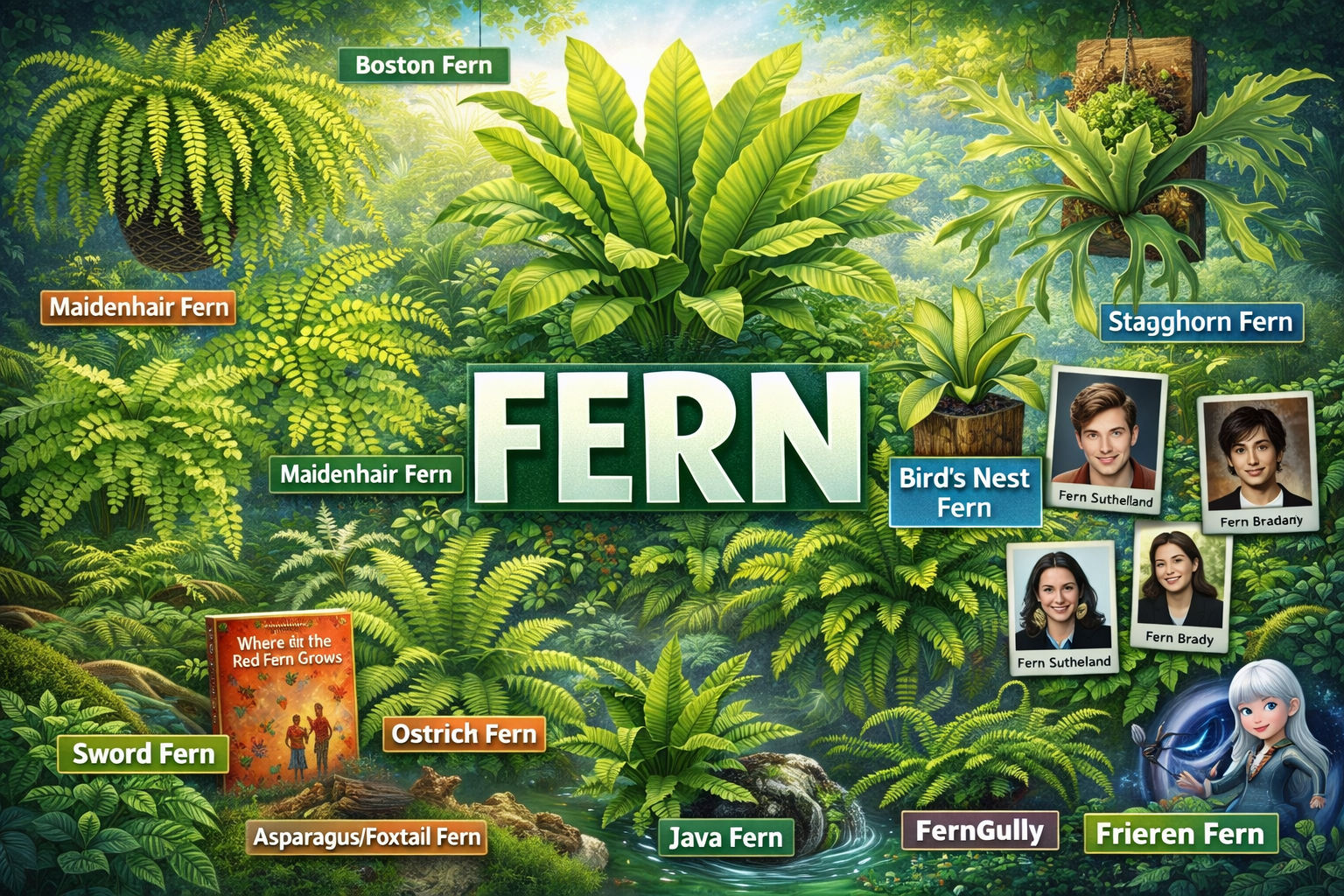
The word “fern” shows up far beyond plants. Where the Red Fern Grows is a classic story title that many students read in school. The name also appears in film culture, like FernGully: The Last Rainforest, which many people remember from childhood. Some public figures also carry the name, like Cody Fern, Fern Sutherland, and Fern Brady. You may also see “Fern” in anime searches, like Fern. These references make the keyword “fern” popular across search, even for people who do not keep plants. It’s a simple word with a lot of reach.
Quick table: popular fern types and how to care for them
This table is here for fast answers. It keeps things simple. Pick the plant type you like, then match it with the care style you can do.
| Type | Best Place | Light | Water | Special Tip |
|---|---|---|---|---|
| Boston fern | Indoors, basket | Bright, indirect | Keep evenly moist | Add humidity for green tips |
| Maidenhair fern | Indoors, humid room | Soft, indirect | Never let it dry | Bathroom is often ideal |
| Bird’s nest fern | Indoors, table | Bright, indirect | Moist, not soggy | Water soil, not the center |
| Staghorn fern | Mounted wall | Bright, indirect | Soak, then drain | Needs airflow |
| Sword fern | Outdoor shade | Shade to part shade | Regular watering | Great woodland border |
| Ostrich fern | Outdoor shade | Shade to part shade | Moist soil | Spreads over time |
| Foxtail/asparagus “fern” | Indoor/outdoor warm | Bright light | Moderate | Not a true fern; pet caution |
| Java fern | Aquarium | Low to medium | Water tank | Don’t bury the rhizome |
FAQs
Final thoughts
A fern can fit almost any space if you choose the right type. If you want a soft, full look, go with boston fern. If you want bold leaves, pick a bird’s nest fern. If you want wall art, try a staghorn fern. For outdoor shade, sword fern and ostrich fern are solid choices. If you want a tank plant, java fern is hard to beat. The biggest secret is simple. Match the plant to your home and your habits. A fern that gets the right light and humidity will reward you fast. If you enjoyed this guide, save it, share it with a plant friend, and tell me what fern you want next.
You may also like to read About: How to Eat Chia Seeds: Easy Ways
About the Author